Ketamine and Spravato, explained
A sixty-year-old anesthetic became the first new kind of antidepressant in a generation. Here is the whole story for patients and clinicians: where it came from, why the nasal spray is only half the molecule, what it does in a synapse, what the trials actually showed, how dose and route compare, how long it lasts, what else it might treat, and what we still don't know.
By Reid Robison, MD. 4,886 words, with a molecule you can turn over, a synapse you can scroll, and a calculator for the question I get most.
I have been working with ketamine since 2011, when a grant from the Intermountain Foundation let me run my first study of it and I led Janssen's intravenous ketamine trial in Salt Lake City. Since then I've been part of thousands of ketamine sessions and Spravato doses, piloted group ketamine-assisted psychotherapy at an eating disorder treatment center, and started the clinic that gave Utah its first Spravato. I say this not as a credential but as a disclosure: I am not neutral about this molecule. I have watched it do things nothing else in psychiatry does, and I have watched it do nothing at all, and I've spent a lot of the last fifteen years trying to tell in advance which it's going to be.
The question I get most, from patients and from colleagues, is some version of is Spravato just ketamine? The honest answer takes a drawing, a little chemistry and about twenty trials, so here it all is.
- Ketamine is an anesthetic from 1962 that turned out, in 2000, to lift depression within hours. Nothing else does that.
- Spravato (esketamine) is one half of ketamine. Ketamine is a 50:50 mix of two mirror-image molecules; Spravato is the S-shaped one alone, in a nasal spray, FDA-approved for treatment-resistant depression in 2019. Generic IV ketamine for depression is off-label and probably at least as effective.
- The mechanism is a glutamate surge that grows new synapses, probably. Three other explanations are still alive, and the honest state of the science is "we know what it does to a spine; we argue about how."
- The trials: single infusions work in about two-thirds of resistant patients for about a week; a course of six to eight lasts weeks; Spravato's pivotal trial won by about four points on a sixty-point scale, and its strongest result is that stopping it brings relapse.
- Dose and route are partly about how much reaches the blood, and partly not. By the crude arithmetic, an 84 mg spray delivers about twice the S-ketamine of a standard infusion, yet it is not obviously the stronger treatment. The calculator below shows the sum and why exposure isn't the whole story.
- It wears off. That is the central clinical problem, and the reason the therapy question matters.
- Beyond depression, the evidence is strongest for suicidal thinking and bipolar depression, moderate for alcohol use disorder and PTSD, and thin for everything else, including the eating disorders I treat.
- The biggest gap is the one the field talks about most: nobody has run a large, controlled trial of ketamine with psychotherapy against ketamine without it.
History: from the battlefield to the dolphin tank to the clinic
Ketamine was made in 1962 by Calvin Stevens at Parke-Davis, as a gentler cousin of phencyclidine, and first given to a human in 1964 by Edward Domino and Guenter Corssen in a Michigan prison.1,2 Domino's wife, Toni, supplied the word that stuck when the company balked at "dreaming": dissociative. It was approved in 1970, and shipped to Vietnam in quantity, because it does something no other anesthetic does: it keeps the airway reflexes and blood pressure up while the patient goes somewhere else.3
- 1962Synthesized at Parke-Davis as CI-581.
- 1964First human doses, Jackson State Prison, Michigan. Volunteers describe floating, and being "in outer space."1
- 1970FDA approval as an anesthetic; widely used in Vietnam as a battlefield anesthetic.
- 1970sJohn Lilly, inventor of the isolation tank, takes ketamine in it and comes back with reports of dolphin group minds. The psychonaut era begins; the term itself is Ernst Jünger's, from 1970.4
- 1978Marcia Moore's Journeys into the Bright World, the first book on ketamine as a psychedelic. She died the following winter after an overdose.5
- 1985–Evgeny Krupitsky in St Petersburg runs ketamine psychedelic therapy for alcoholism, a decade of work the West mostly ignored.6
- 1994John Krystal at Yale gives subanesthetic ketamine to healthy volunteers as a model of schizophrenia. The dose he settled on, 0.5 mg/kg over 40 minutes, is the one every depression trial would use.7
- 1990sClub use rises; the DEA makes it Schedule III in 1999.
- 2000Berman and colleagues at Yale give that same infusion to seven depressed patients. Depression lifts within hours. Nobody had seen that before.8
- 2006Zarate at the NIMH replicates it in treatment-resistant patients: 71% respond at 24 hours.9
- 2011Janssen begins developing the S-enantiomer as a nasal spray. I ran their intravenous study in Salt Lake City that year.
- 2019Spravato approved by the FDA for treatment-resistant depression (March), the first mechanistically new antidepressant since the 1980s; approval for depression with suicidal thinking follows in 2020, and as a monotherapy in 2025.10
- 2023Two NEJM trials in one year: esketamine beats quetiapine; IV ketamine is non-inferior to ECT in outpatients.11,12
Three things about that timeline are worth holding onto. The dose came from a schizophrenia study, not a depression study. The psychedelic use came before the psychiatric use, by thirty years. And the drug has been generic the whole time, which is why a pharmaceutical company had to find a half of it to patent.
Chirality: one molecule, two hands
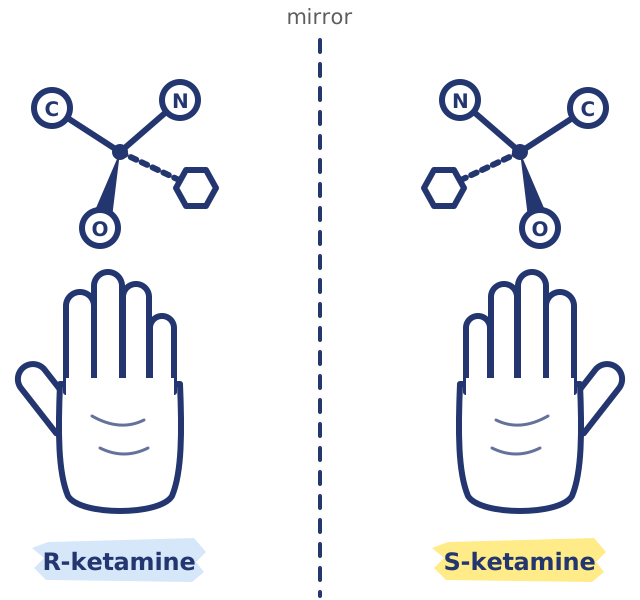
Ketamine has one carbon atom with four different things attached to it. Any such carbon can be built two ways, which are mirror images of each other and can't be rotated into one another, the way your left hand can't be rotated into your right. Chemists call the two forms enantiomers and label them R and S. Ordinary ketamine, the stuff in the anesthesia cart and the IV bag, is a racemic mixture: exactly half R, half S. Esketamine, the es- being the letter S, is the S half purified out. Spravato is esketamine. That's the whole difference in chemistry, and it is not nothing.
The chirality lab
Both molecules turn together. Try to find an angle where they match, then press "try to overlay."
The four groups on ketamine's chiral carbon are the chlorophenyl ring, the methylamino group, and the two sides of the cyclohexanone ring. The drawing is schematic.
Why does it matter which hand? Because receptors are also handed. The NMDA receptor, ketamine's main target, binds the S form about three to four times more tightly than the R form, so the S enantiomer is roughly twice as potent as the racemic mixture and you need about half the milligrams.2 That is the pharmacological case for Spravato: more of the active hand, less of the other, lower dose. There are two complications. First, the R form is not inert: in mice it is the better antidepressant, longer-lasting and with less dissociation, which is a puzzle if NMDA blockade is the whole story.13 A small open-label pilot of IV arketamine in humans looked promising; controlled trials have been less convincing, and the puzzle is open.14 Second, the only randomized head-to-head in depressed patients, from Brazil, gave IV esketamine at half the dose of IV racemic ketamine and found them non-inferior, which is exactly what the chemistry predicts and tells you nothing about which hand does the work.15
So: is Spravato just ketamine? It is half of ketamine, the half that fits the receptor best, delivered through the nose at a dose adjusted for both facts. Whether that half alone is better, worse or the same as both halves together is a question no large trial has answered directly, and the indirect comparisons lean, if anything, toward the IV racemic drug.16
Mechanism: what happens in a synapse
The textbook account, which is probably mostly right, goes like this. Ketamine blocks the NMDA receptor, a glutamate-gated channel. At the low doses used for depression it blocks them preferentially on fast-firing inhibitory interneurons, the cells whose job is to keep the cortex's pyramidal neurons in check.17 With the brake off, pyramidal cells fire more and glutamate floods the synapse. The flood lands on AMPA receptors, the other glutamate receptor, and the resulting activity makes the postsynaptic cell release BDNF, which binds TrkB, which switches on mTORC1, which drives local protein synthesis, which, within hours, grows new dendritic spines.18 The depressed prefrontal cortex has fewer synapses than it should; ketamine grows some back, fast.19 Scroll the synapse.
1 · A synapse at rest
A pyramidal cell's terminal releases glutamate across the cleft onto a dendritic spine carrying AMPA and NMDA receptors. Off to the side, a GABA interneuron fires fast and keeps the pyramidal cell from running away with itself. In depression, prefrontal synapses like this one are fewer and smaller than they should be.
2 · Ketamine plugs the channel
Ketamine sits inside the NMDA receptor's pore, but only when the channel is open, and the channels that are open most are on the fast-firing interneurons. So at a low dose, the interneurons go quiet first. This is the step the drug is named for and the step that's least in dispute.
3 · The brake comes off
With the interneuron silenced, the pyramidal cell fires freely and glutamate release surges. Moghaddam showed this in 1997 in rats, measuring the glutamate directly.17 It is the counterintuitive heart of the mechanism: a glutamate blocker that works by causing a glutamate surge.
4 · AMPA, then BDNF
The surge hits AMPA receptors. Block AMPA in the animal and ketamine's antidepressant effect vanishes, which is why AMPA, not NMDA, is thought to carry the therapeutic signal. The active spine releases BDNF, the growth factor, which binds its receptor TrkB. Mice that can't release BDNF properly don't respond to ketamine.20
5 · mTOR and new spines
TrkB activates mTORC1, the cell's master switch for building protein locally at the synapse. Li and Duman showed in 2010 that blocking mTOR blocks the antidepressant effect, and that new spines appear on prefrontal neurons within 24 hours.18 That is the timescale of the clinical effect, and no other antidepressant does it in less than weeks.
6 · The other explanations
Three live rivals. The metabolite (2R,6R)-hydroxynorketamine, made from the R half, is antidepressant in mice without touching NMDA receptors at all.21 Naltrexone, an opioid blocker, abolished ketamine's effect in a small Stanford crossover trial, which suggests the opioid system is at least necessary.22 And in rats, ketamine silences the bursting of the lateral habenula, the brain's "anti-reward" nucleus, within minutes, a different account of the same relief.23 They are not mutually exclusive. They are mutually embarrassing.
7 · And then it prunes
The new spines last days to a couple of weeks and are then pruned back, roughly in step with the return of symptoms.19 This is the mechanism's most clinically important detail: the drug grows the hardware quickly and the brain, left alone, takes it back. What you do with the window, which is where psychotherapy enters the story, may decide which spines are kept.
The trials: what was studied and what the numbers mean
There are two bodies of evidence and they don't mix well. For racemic ketamine, mostly intravenous, there are dozens of investigator-led trials, nearly all small, nearly all a single infusion against saline or midazolam, with the outcome measured at 24 hours to a week. For esketamine, there is one company's Phase 3 program: large, long, against a placebo spray, with an oral antidepressant started in both arms at the same time, and the outcome measured at four weeks. The ketamine trials ask "does it work?"; the esketamine trials ask "does it add to a new antidepressant, and keep working?" Here are the ones that matter, as response and remission rates rather than effect sizes, because that's what you can picture.
Response at 24 hours. The trial that made people believe Berman.9
First trial with an active placebo that also makes you feel strange. The gap survived.24
Proof that the nose works, five years before Spravato.25
Among stable remitters, stopping the spray roughly doubled relapse. The strongest Spravato result.29
The first head-to-head against a real comparator. Open-label, which cuts both ways.11
A needle under the skin, no pump, no line. Modest absolute numbers in a very resistant group.31
What the numbers mean, in order. First, a single infusion of ketamine reliably produces a response in roughly half to two-thirds of people who have failed several antidepressants, within a day, against a placebo rate near zero to a quarter. That has been replicated enough times that it is no longer in doubt.32 Second, Spravato's margin over placebo is real and modest: about four points on the MADRS, a sixty-point scale, in the one short-term Phase 3 trial that succeeded, with the two others (a fixed-dose trial, and a trial in people over 65) missing their primary endpoints.26,27,28 Both arms in those trials also started a new antidepressant, which is part of why the placebo response was so high. Third, the relapse-prevention trial is Spravato's best evidence: in people who had already remitted, continuing the spray cut relapse from 45% to 27%.29 Fourth, the two suicidality trials showed faster improvement in depression but no significant effect on the suicidality scale itself; the 2020 label expansion rests on the depression result.33,34 Fifth, 2023 gave us the comparisons the field wanted: esketamine beat quetiapine head-to-head, and IV ketamine was non-inferior to ECT in outpatients, though a Swedish trial in sicker inpatients found ECT better.11,12,30
The question nobody has run the trial to answer: IV ketamine versus Spravato, same patients, same schedule. Meta-analyses that compare across trials favour the IV drug, with the caveat that the IV trials were shorter, smaller, and measured earlier, when the effect is biggest.16 My clinical read, for what it's worth, is that IV ketamine is somewhat stronger per session, Spravato is more consistent and easier to sustain, and the difference matters less than the question of what happens after week four.
Dose, route and bioequivalence
The standard infusion is 0.5 mg/kg of racemic ketamine over 40 minutes: for a 70 kg adult, 35 mg, of which 17.5 mg is the S enantiomer. Spravato comes as 56 or 84 mg of esketamine, of which the label says about 48% is absorbed through the nose.10 Oral ketamine has a bioavailability around 17–29%, intramuscular about 93%, sublingual troches around 30%, intranasal racemic around 45%.35,36 Oral dosing has one small positive placebo-controlled trial behind it, three times a week for three weeks.37 If you want a crude way to compare any dose by any route with the reference infusion, multiply the dose by the fraction absorbed and by the fraction that is S-ketamine. That's what this does.
What actually reaches the blood
A back-of-envelope estimate of absorbed S-ketamine, compared with the 0.5 mg/kg infusion everyone studied. Not a dosing tool.
Caveats that matter: absorbed dose is not the same as peak level or time course (an IV infusion peaks lower and later than an IM shot of the same dose); oral and sublingual routes make far more norketamine and hydroxynorketamine, which may be active in their own right; nasal absorption varies a lot with technique and a cold; and nobody has shown that equal exposure means equal antidepressant effect. Use it to understand the question, not to pick a dose.
Run the default and you'll see the puzzle: 84 mg of esketamine through the nose puts roughly twice as much S-ketamine into the blood as the standard infusion, and yet nobody thinks Spravato is twice as strong. The reason is the rest of the pharmacology: the spray is absorbed over half an hour or more and peaks lower; the infusion delivers the R half too, with its own metabolites; and the relationship between exposure and antidepressant effect is not linear anywhere in this literature.
Two findings from the trials bear on dose. In the esketamine program, 84 mg was not clearly better than 56 mg, and the fixed-dose trial missed significance at both.27,26 In the IV literature, there is a dose-response: a 2020 dose-ranging trial of 0.1 to 1.0 mg/kg found the standard and higher doses clearly active and 0.1 mg/kg not clearly better than placebo, and the Australian subcutaneous trial got its result only after raising doses toward 0.9 mg/kg.38,31 The practical upshot is that the standard infusion sits near the middle of the useful range, and that very low doses, including some of what is sold as "microdosed" ketamine, probably don't do much.
How long it lasts
The honest answer is: not long enough. After a single infusion, the effect peaks at 24 hours and, in most responders, is gone within a week; the median time to relapse in the single-infusion trials is a few days to two weeks.9,24 A course of six infusions over two weeks produces a longer response, typically measured in weeks rather than days, and Phillips' trial found that weekly maintenance infusions held the response for most of those who had one, while those who stopped relapsed at a median of around two to three weeks.39,40 Spravato's schedule is built on the same shape: twice weekly for four weeks, weekly for four, then weekly or every other week for as long as it's working.10 The mechanism section explains why: spines grow in a day and prune over weeks.
The shape of the effect
A schematic, not data: how symptom relief rises and fades with a single dose, a course, and maintenance. Pink dots are induction doses, yellow are maintenance.
What the curve can't show: a minority of people get a long remission from a short course, a minority get nothing from a long one, and the published trials can't yet tell you in advance which you'll be.
Safety, briefly
Acutely: dissociation (which is the point for some and the problem for others), a rise in blood pressure and heart rate for an hour or so, nausea, dizziness, and in a few people anxiety during the session. These are why Spravato requires two hours of observation after each dose under its REMS program, and why I'd want the same for any infusion.10,41 Longer term, the concerns come from heavy recreational use rather than clinical dosing: bladder damage (ketamine cystitis), memory impairment and dependence are well documented in people using grams a day, and are the reason clinical protocols cap frequency and ask about use between sessions.42,43 Whether twice-weekly clinical dosing for years carries any of that risk is, honestly, not known; the longest Spravato follow-ups run a few years and are reassuring but not definitive. At-home sublingual ketamine by telehealth, which grew enormously after 2020, has one large open-label effectiveness study behind it and no controlled trial; the consensus statements of the field have been consistent that the drug's safety record was built in supervised settings.44,45,46
Beyond depression: the evidence, ranked
Everything below is off-label, including IV ketamine for depression itself; only Spravato has an FDA indication. The grades are mine: A means replicated randomized trials, B means at least one adequate randomized trial, C means small or conflicting randomized data, D means case series, and E means hope. "RCTs" counts randomized controlled trials I'd consider informative.
- Aon-labelTreatment-resistant unipolar depression Spravato FDA 2019
The body of evidence above. Replicated for IV racemic ketamine across many trials; Phase 3 program for esketamine.32
- A−5+ RCTsSuicidal ideation, acute rapid
An individual-patient meta-analysis of ten trials found a single infusion reduced suicidal thoughts within a day in about half of patients, independent of the effect on depression.47 Esketamine's own suicidality trials improved depression but did not separate from placebo on the suicidality measure.33,34 Nothing here tells you about suicide itself.
- B+2 RCTs
- B2 RCTsAlcohol use disorder
A single infusion paired with motivational therapy reduced heavy drinking over three weeks; a British trial of three infusions with relapse-prevention therapy cut heavy-drinking days at six months.50,51 Krupitsky's Russian work from the 1980s said the same thing in a different language.6
- B−3 RCTs, mixedPTSD
A single infusion beat midazolam at 24 hours; six infusions over two weeks beat midazolam at two weeks in civilians.52,53 A larger multi-site trial in veterans and active-duty personnel found no dose-related benefit.54 The civilian–military split may be about chronicity, moral injury, or chance.
- C+1 RCTCocaine use disorder
One infusion plus mindfulness training: 48% abstinent at the end of five weeks against 11% with midazolam.55 One trial, one group, never replicated.
- C2 small RCTs
- C1 small RCTOCD
A fifteen-person crossover: half responded at one week against none on saline, in patients without comorbid depression.58 Promising, unreplicated, and a mechanism that makes sense (OCD is a glutamate disorder on several lines of evidence).
- C−1 RCTChronic pain, complex regional pain syndrome
A ten-day outpatient infusion protocol reduced pain against placebo for weeks.59 Anesthesiologists have used it this way for decades with more enthusiasm than trials.
- Dcase seriesEating disorders
Mills' 1998 series of fifteen patients with compulsive eating-disorder behavior, nine of whom improved after intermittent infusions, is still the largest controlled-looking report.60 Our group ketamine-assisted psychotherapy series at a residential eating disorder program found improvements in depression and anxiety, with no controls.61 A 2021 narrative review found a handful of cases and one open pilot, and nothing randomized.62 I work in this area, and this grade is accurate.
Missing from the ladder on purpose: "general wellness," "burnout," and the various things telehealth ketamine is marketed for that don't have a trial attached. The absence of evidence there is real.
Ketamine-assisted psychotherapy, and the three ways to use the drug
There are three honest ways to work with ketamine, and they are often confused, so here they are side by side.
Ketamine or Spravato as a medical intervention. In the clinic, twice a week to start, then less often as tolerated. Therapy, if any, happens elsewhere. This is what the trials studied.
A lower dose, by lozenge or spray, taken before a therapy session so that the session goes deeper; the therapist is present the whole time. Closest to how Krupitsky and the Russian school worked.
A full IM or IV dose in the ketamine room, with preparation before, brief support during, and integration sessions in between. Closest to the psilocybin trial model.
The case for pairing ketamine with therapy is coherent: the drug opens a window of plasticity, lowers defenses, and sometimes produces an experience people find meaningful, and the window closes in days. The evidence for it is thinner than the case. The largest dataset is a 2019 report of 235 patients across three practices doing ketamine-assisted psychotherapy, with good outcomes and no comparison group.63 A small Yale pilot found that cognitive behavioral therapy after a course of infusions slowed relapse.64 The most rigorous trial to date is a strange and encouraging one: Price and colleagues gave a single infusion and then four days of a brief, automated, computer-delivered self-association exercise, and found it extended the antidepressant effect out to a month, against the same infusion with a sham exercise.65 In alcohol use disorder, the British trial found the ketamine effect but little added benefit from the therapy arm, which is the only controlled test of the specific question in that population.51 A 2022 review of the field concluded what I'd conclude: the models are plausible, the mechanisms line up, and the controlled trials that would settle it have not been run.66,67
My own practice, for the record: I do all three, I think the psycholytic model is underrated and the psychedelic model oversold, and I think the single most useful thing a therapist does around ketamine is not the session itself but the week after it.
The gaps
- IV ketamine versus Spravato, head to head. The comparison patients ask about and insurers decide on, and it has never been run at scale with the same schedule in the same people.
- Ketamine with therapy versus ketamine without. The field's favorite claim and its biggest missing trial. The Price study shows how cheaply the question can be asked; nobody has asked it with a human therapist and a real sample size.
- Which hand. Whether R-ketamine, S-ketamine or the mixture is the better antidepressant is a question the animal data and the human data answer differently.
- Who responds. Fifteen years in, there is no validated predictor of response. Not a biomarker, not a clinical profile, not a dissociation score. The best predictor is still the first infusion.
- Long-term safety of clinical dosing. We know what grams a day does. We don't know what 56 mg twice a month for ten years does, because nobody has done it for ten years yet.
- Maintenance. How long to continue, how to stop, and whether anything (an oral antidepressant, lithium, therapy, exercise) lets you stop sooner. The relapse-prevention trial says stopping is bad; nothing says how to make stopping safe.
- Dose and route, properly. No adequately powered trial has compared oral, sublingual, intranasal and IV ketamine at matched exposure. The calculator above is the state of the art, which is a problem.
- Everything outside depression. One good trial each, at best, for most of the ladder.
- The at-home question. Telehealth ketamine reached a lot of people fast. Its safety case is an open-label study and an absence of catastrophes, which is not the same thing as evidence.
None of that is a reason not to use it. It is a reason to be precise about what we're doing when we do.
This post is educational and isn't medical advice, and the calculator is for understanding, not prescribing. Ketamine is a controlled substance with real risks, and Spravato is dispensed only under supervision for good reasons. If you're considering either, talk to a clinician who does this work and will tell you the parts that didn't fit on this page. If you're in crisis, in the US you can call or text 988 any time.
References
- Domino EF, Chodoff P, Corssen G. Pharmacologic effects of CI-581, a new dissociative anesthetic, in man. Clin Pharmacol Ther. 1965;6:279–291.
- Domino EF. Taming the ketamine tiger. Anesthesiology. 2010;113(3):678–684.
- Jansen K. Ketamine: Dreams and Realities. MAPS; 2001.
- Lilly JC. The Scientist: A Novel Autobiography. Lippincott; 1978.
- Moore M, Alltounian H. Journeys into the Bright World. Para Research; 1978.
- Krupitsky EM, Grinenko AY. Ketamine psychedelic therapy (KPT): a review of the results of ten years of research. J Psychoactive Drugs. 1997;29(2):165–183.
- Krystal JH, Karper LP, Seibyl JP, et al. Subanesthetic effects of the noncompetitive NMDA antagonist, ketamine, in humans. Arch Gen Psychiatry. 1994;51(3):199–214.
- Berman RM, Cappiello A, Anand A, et al. Antidepressant effects of ketamine in depressed patients. Biol Psychiatry. 2000;47(4):351–354.
- Zarate CA, Singh JB, Carlson PJ, et al. A randomized trial of an N-methyl-D-aspartate antagonist in treatment-resistant major depression. Arch Gen Psychiatry. 2006;63(8):856–864.
- Spravato (esketamine) nasal spray. Prescribing information. Janssen Pharmaceuticals; 2025.
- Reif A, Bitter I, Buyze J, et al. Esketamine nasal spray versus quetiapine for treatment-resistant depression (ESCAPE-TRD). N Engl J Med. 2023;389(14):1298–1309.
- Anand A, Mathew SJ, Sanacora G, et al. Ketamine versus ECT for nonpsychotic treatment-resistant major depression (ELEKT-D). N Engl J Med. 2023;388(25):2315–2325.
- Zhang JC, Li SX, Hashimoto K. R(-)-ketamine shows greater potency and longer lasting antidepressant effects than S(+)-ketamine. Pharmacol Biochem Behav. 2014;116:137–141.
- Leal GC, Bandeira ID, Correia-Melo FS, et al. Intravenous arketamine for treatment-resistant depression: open-label pilot study. Eur Arch Psychiatry Clin Neurosci. 2021;271(3):577–582.
- Correia-Melo FS, Leal GC, Vieira F, et al. Efficacy and safety of adjunctive therapy using esketamine or racemic ketamine for adult treatment-resistant depression: a randomized, double-blind, non-inferiority study. J Affect Disord. 2020;264:527–534.
- Bahji A, Vazquez GH, Zarate CA. Comparative efficacy of racemic ketamine and esketamine for depression: a systematic review and meta-analysis. J Affect Disord. 2021;278:542–555.
- Moghaddam B, Adams B, Verma A, Daly D. Activation of glutamatergic neurotransmission by ketamine: a novel step in the pathway from NMDA receptor blockade to dopaminergic and cognitive disruptions associated with the prefrontal cortex. J Neurosci. 1997;17(8):2921–2927.
- Li N, Lee B, Liu RJ, et al. mTOR-dependent synapse formation underlies the rapid antidepressant effects of NMDA antagonists. Science. 2010;329(5994):959–964.
- Moda-Sava RN, Murdock MH, Parekh PK, et al. Sustained rescue of prefrontal circuit dysfunction by antidepressant-induced spine formation. Science. 2019;364(6436):eaat8078.
- Autry AE, Adachi M, Nosyreva E, et al. NMDA receptor blockade at rest triggers rapid behavioural antidepressant responses. Nature. 2011;475(7354):91–95.
- Zanos P, Moaddel R, Morris PJ, et al. NMDAR inhibition-independent antidepressant actions of ketamine metabolites. Nature. 2016;533(7604):481–486.
- Williams NR, Heifets BD, Blasey C, et al. Attenuation of antidepressant effects of ketamine by opioid receptor antagonism. Am J Psychiatry. 2018;175(12):1205–1215.
- Yang Y, Cui Y, Sang K, et al. Ketamine blocks bursting in the lateral habenula to rapidly relieve depression. Nature. 2018;554(7692):317–322.
- Murrough JW, Iosifescu DV, Chang LC, et al. Antidepressant efficacy of ketamine in treatment-resistant major depression: a two-site randomized controlled trial. Am J Psychiatry. 2013;170(10):1134–1142.
- Lapidus KAB, Levitch CF, Perez AM, et al. A randomized controlled trial of intranasal ketamine in major depressive disorder. Biol Psychiatry. 2014;76(12):970–976.
- Popova V, Daly EJ, Trivedi M, et al. Efficacy and safety of flexibly dosed esketamine nasal spray combined with a newly initiated oral antidepressant in treatment-resistant depression: a randomized double-blind active-controlled study (TRANSFORM-2). Am J Psychiatry. 2019;176(6):428–438.
- Fedgchin M, Trivedi M, Daly EJ, et al. Efficacy and safety of fixed-dose esketamine nasal spray combined with a new oral antidepressant in treatment-resistant depression: TRANSFORM-1. Int J Neuropsychopharmacol. 2019;22(10):616–630.
- Ochs-Ross R, Daly EJ, Zhang Y, et al. Efficacy and safety of esketamine nasal spray plus an oral antidepressant in elderly patients with treatment-resistant depression: TRANSFORM-3. Am J Geriatr Psychiatry. 2020;28(2):121–141.
- Daly EJ, Trivedi MH, Janik A, et al. Efficacy of esketamine nasal spray plus oral antidepressant treatment for relapse prevention in patients with treatment-resistant depression: SUSTAIN-1. JAMA Psychiatry. 2019;76(9):893–903.
- Ekstrand J, Fattah C, Persson M, et al. Racemic ketamine as an alternative to electroconvulsive therapy for unipolar depression: a randomized, open-label, non-inferiority trial (KetECT). Int J Neuropsychopharmacol. 2022;25(5):339–349.
- Loo C, Glozier N, Barton D, et al. Efficacy and safety of a 4-week course of repeated subcutaneous ketamine injections for treatment-resistant depression (KADS study): randomised double-blind active-controlled trial. Br J Psychiatry. 2023;223(6):533–541.
- McIntyre RS, Rosenblat JD, Nemeroff CB, et al. Synthesizing the evidence for ketamine and esketamine in treatment-resistant depression: an international expert opinion on the available evidence and implementation. Am J Psychiatry. 2021;178(5):383–399.
- Fu DJ, Ionescu DF, Li X, et al. Esketamine nasal spray for rapid reduction of major depressive disorder symptoms in patients who have active suicidal ideation with intent: ASPIRE I. J Clin Psychiatry. 2020;81(3):19m13191.
- Ionescu DF, Fu DJ, Qiu X, et al. Esketamine nasal spray for rapid reduction of depressive symptoms in patients with major depressive disorder who have active suicide ideation with intent: ASPIRE II. Int J Neuropsychopharmacol. 2021;24(1):22–31.
- Clements JA, Nimmo WS, Grant IS. Bioavailability, pharmacokinetics, and analgesic activity of ketamine in humans. J Pharm Sci. 1982;71(5):539–542.
- Yanagihara Y, Ohtani M, Kariya S, et al. Plasma concentration profiles of ketamine and norketamine after administration of various ketamine preparations to healthy Japanese volunteers. Biopharm Drug Dispos. 2003;24(1):37–43.
- Domany Y, Bleich-Cohen M, Tarrasch R, et al. Repeated oral ketamine for out-patient treatment of resistant depression: randomised, double-blind, placebo-controlled, proof-of-concept study. Br J Psychiatry. 2019;214(1):20–26.
- Fava M, Freeman MP, Flynn M, et al. Double-blind, placebo-controlled, dose-ranging trial of intravenous ketamine as adjunctive therapy in treatment-resistant depression (TRD). Mol Psychiatry. 2020;25(7):1592–1603.
- Phillips JL, Norris S, Talbot J, et al. Single, repeated, and maintenance ketamine infusions for treatment-resistant depression: a randomized controlled trial. Am J Psychiatry. 2019;176(5):401–409.
- Shiroma PR, Thuras P, Wels J, et al. A randomized, double-blind, active placebo-controlled study of efficacy, safety, and durability of repeated vs single subanesthetic ketamine for treatment-resistant depression. Transl Psychiatry. 2020;10:206.
- Short B, Fong J, Galvez V, Shelker W, Loo CK. Side-effects associated with ketamine use in depression: a systematic review. Lancet Psychiatry. 2018;5(1):65–78.
- Shahani R, Streutker C, Dickson B, Stewart RJ. Ketamine-associated ulcerative cystitis: a new clinical entity. Urology. 2007;69(5):810–812.
- Morgan CJA, Curran HV. Ketamine use: a review. Addiction. 2012;107(1):27–38.
- Hull TD, Malgaroli M, Gazzaley A, et al. At-home, sublingual ketamine telehealth is a safe and effective treatment for moderate to severe anxiety and depression: findings from a large, prospective, open-label effectiveness trial. J Affect Disord. 2022;314:59–67.
- Wilkinson ST, Sanacora G. Considerations on the off-label use of ketamine as a treatment for mood disorders. JAMA. 2017;318(9):793–794.
- Sanacora G, Frye MA, McDonald W, et al. A consensus statement on the use of ketamine in the treatment of mood disorders. JAMA Psychiatry. 2017;74(4):399–405.
- Wilkinson ST, Ballard ED, Bloch MH, et al. The effect of a single dose of intravenous ketamine on suicidal ideation: a systematic review and individual participant data meta-analysis. Am J Psychiatry. 2018;175(2):150–158.
- Diazgranados N, Ibrahim L, Brutsche NE, et al. A randomized add-on trial of an N-methyl-D-aspartate antagonist in treatment-resistant bipolar depression. Arch Gen Psychiatry. 2010;67(8):793–802.
- Zarate CA, Brutsche NE, Ibrahim L, et al. Replication of ketamine's antidepressant efficacy in bipolar depression: a randomized controlled add-on trial. Biol Psychiatry. 2012;71(11):939–946.
- Dakwar E, Levin F, Hart CL, et al. A single ketamine infusion combined with motivational enhancement therapy for alcohol use disorder: a randomized midazolam-controlled pilot trial. Am J Psychiatry. 2020;177(2):125–133.
- Grabski M, McAndrew A, Lawn W, et al. Adjunctive ketamine with relapse prevention-based psychological therapy in the treatment of alcohol use disorder. Am J Psychiatry. 2022;179(2):152–162.
- Feder A, Parides MK, Murrough JW, et al. Efficacy of intravenous ketamine for treatment of chronic posttraumatic stress disorder: a randomized clinical trial. JAMA Psychiatry. 2014;71(6):681–688.
- Feder A, Costi S, Rutter SB, et al. A randomized controlled trial of repeated ketamine administration for chronic posttraumatic stress disorder. Am J Psychiatry. 2021;178(2):193–202.
- Abdallah CG, Roache JD, Gueorguieva R, et al. Dose-related effects of ketamine for antidepressant-resistant symptoms of posttraumatic stress disorder in veterans and active duty military: a double-blind, randomized, placebo-controlled multi-center clinical trial. Neuropsychopharmacology. 2022;47(8):1574–1581.
- Dakwar E, Nunes EV, Hart CL, et al. A single ketamine infusion combined with mindfulness-based behavioral modification to treat cocaine dependence: a randomized clinical trial. Am J Psychiatry. 2019;176(11):923–930.
- Glue P, Medlicott NJ, Harland S, et al. Ketamine's dose-related effects on anxiety symptoms in patients with treatment refractory anxiety disorders. J Psychopharmacol. 2017;31(10):1302–1305.
- Taylor JH, Landeros-Weisenberger A, Coughlin C, et al. Ketamine for social anxiety disorder: a randomized, placebo-controlled crossover trial. Neuropsychopharmacology. 2018;43(2):325–333.
- Rodriguez CI, Kegeles LS, Levinson A, et al. Randomized controlled crossover trial of ketamine in obsessive-compulsive disorder: proof-of-concept. Neuropsychopharmacology. 2013;38(12):2475–2483.
- Schwartzman RJ, Alexander GM, Grothusen JR, et al. Outpatient intravenous ketamine for the treatment of complex regional pain syndrome: a double-blind placebo controlled study. Pain. 2009;147(1-3):107–115.
- Mills IH, Park GR, Manara AR, Merriman RJ. Treatment of compulsive behaviour in eating disorders with intermittent ketamine infusions. QJM. 1998;91(7):493–503.
- Robison R, Lafrance A, Brendle M, et al. A case series of group-based ketamine-assisted psychotherapy for patients in residential treatment for eating disorders with comorbid depression and anxiety disorders. J Eat Disord. 2022;10:65.
- Keeler JL, Treasure J, Juruena MF, Kan C, Himmerich H. Ketamine as a treatment for anorexia nervosa: a narrative review. Nutrients. 2021;13(11):4158.
- Dore J, Turnipseed B, Dwyer S, et al. Ketamine assisted psychotherapy (KAP): patient demographics, clinical data and outcomes in three large practices administering ketamine with psychotherapy. J Psychoactive Drugs. 2019;51(2):189–198.
- Wilkinson ST, Wright D, Fasula MK, et al. Cognitive behavior therapy may sustain antidepressant effects of intravenous ketamine in treatment-resistant depression. Psychother Psychosom. 2017;86(3):162–167.
- Price RB, Spotts C, Panny B, et al. A novel, brief, fully automated intervention to extend the antidepressant effect of a single ketamine infusion: a randomized clinical trial. Am J Psychiatry. 2022;179(12):959–970.
- Mathai DS, Mora V, Garcia-Romeu A. Toward synergies of ketamine and psychotherapy. Front Psychol. 2022;13:868103.
- Kolp E, Friedman HL, Krupitsky E, et al. Ketamine psychedelic psychotherapy: focus on its pharmacology, phenomenology, and clinical applications. Int J Transpers Stud. 2014;33(2):84–140.